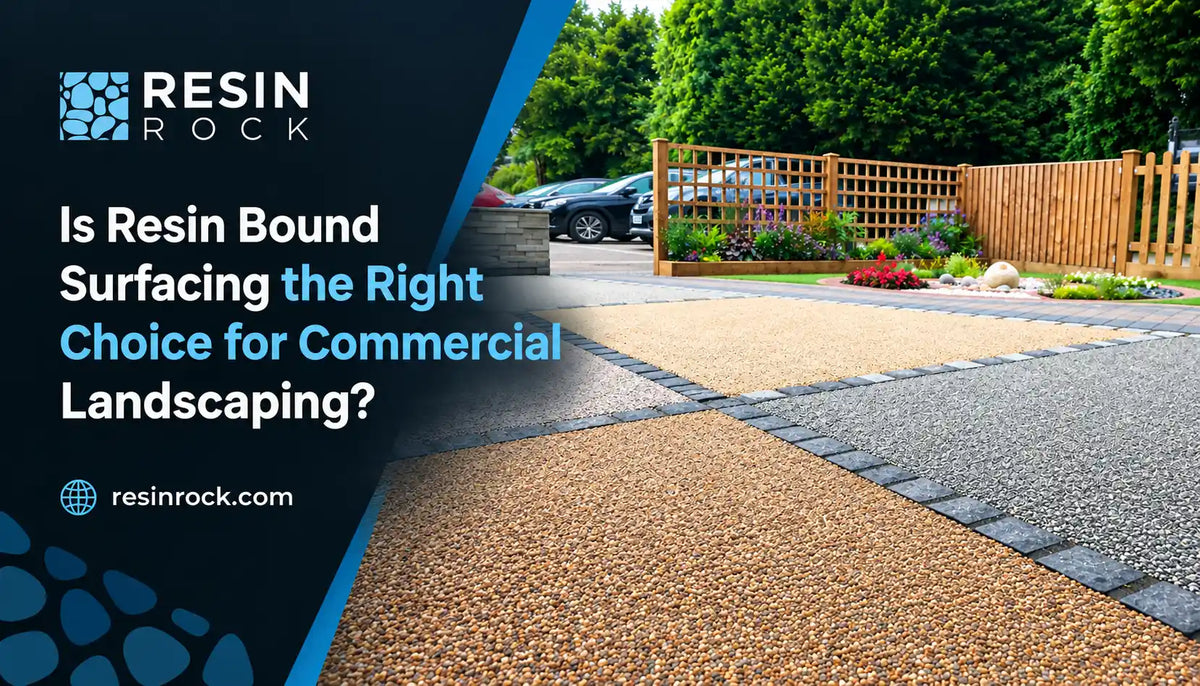
Commercial surfaces carry more than foot traffic. They carry your brand image, your liability risk and your maintenance budget. Resin bound surfacing addresses all three. Graded natural stone is mixed with a clear resin binder, then trowelled into a smooth, porous layer. This suits plazas, car parks, campuses, hotels and retail frontages. This guide covers what property managers, architects and contractors need to know before specifying it.
What Is Resin Bound Surfacing?
Resin Bound Surfacing is a blend of natural aggregate and a UV stable resin binder, laid over a stable base. Every stone is coated in bound resin, so the mix sets as one porous layer instead of loose gravel. This differs from resin bonded surfacing, where stone is scattered over wet resin and loose stones can lift over time.
Resin Rock supplies resin bound materials, including aggregates, gravel resin binder and installation tools. Our team also runs installer training, so the guidance below comes from site experience.
Core Benefits for Commercial Landscaping
Durability Under Daily Use
Resin bound paving handles pedestrians, maintenance vehicles and light commercial traffic when built correctly. Layer thickness usually sits between 12 and 24 mm depending on the load, over a compacted sub base. The binder stays slightly flexible, so the surface resists the cracking common in rigid concrete. Because every stone is locked in, there is no scatter, no ruts and no loose gravel to track indoors.
Slip Resistance and Safety
Exposed stone gives the surface natural texture, which grips in wet weather. Tenants and visitors benefit directly, and facility managers carry less risk. Our guide on slip resistance explains how aggregate choice and finish affect grip. For entrances, ramps and pool surrounds, we recommend sample testing before final approval.
Permeability and Drainage
Water passes through the resin bound layer, which supports Sustainable Drainage Systems (SuDS) requirements and reduces surface puddles. One point is often missed. Full drainage depends on a permeable base beneath the surface. If the base is sealed, water still runs off the surface, so specify the whole build up rather than the top layer alone.
Accessibility
The surface is smooth, firm and joint free. That suits wheelchairs, strollers and walking aids, and it supports ADA accessibility goals. There are no paver edges to settle, no gaps to catch heels and no trip lips.
Design Flexibility
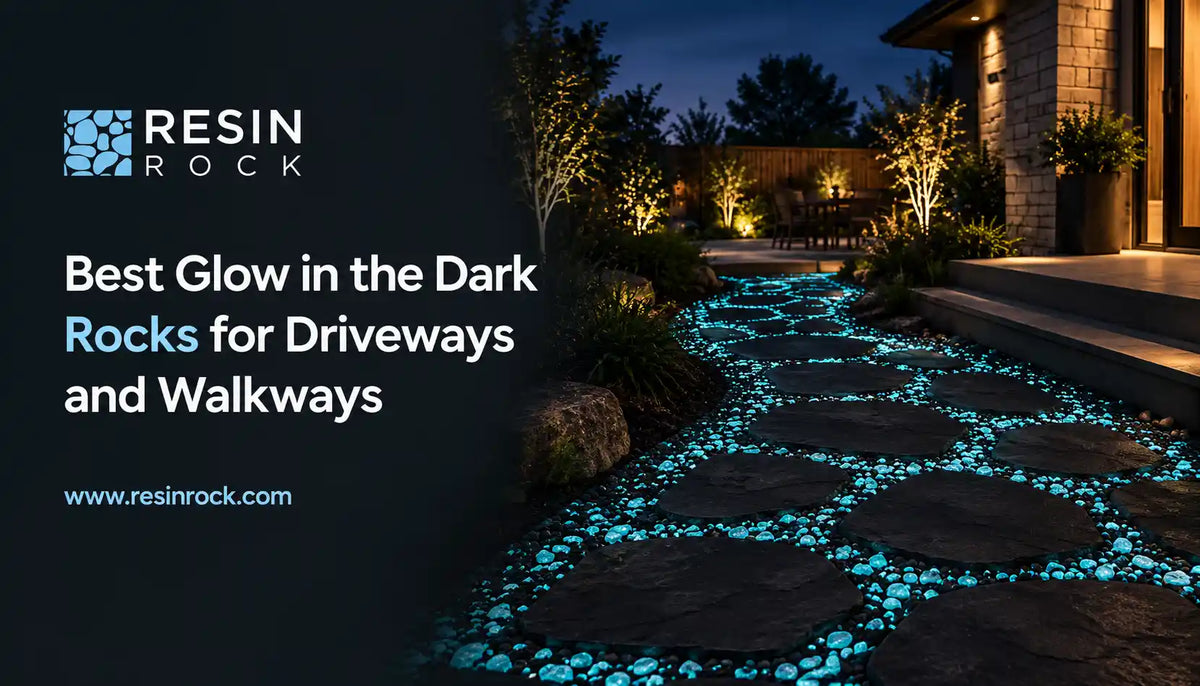
Aggregate blends range from natural greys and golds to bold multicolour mixes. Designers can add borders, pathway markings and brand colours in one continuous finish. Resin Rock also offers glow in the dark options for walkways that need night time guidance.
Low Maintenance
Routine care means sweeping, an occasional low pressure wash and prompt removal of spills. The surface has no joints, so weeds have nowhere to root. Shaded areas can still collect algae, so schedule seasonal cleaning for those zones. A UV stable binder keeps colour consistent, though a cheap non UV resin can yellow, so always confirm the binder type.
Heat, Weather and Lifespan
UV stable resin handles strong sun without softening the way asphalt can. Darker blends do absorb more heat, so choose lighter stone for sun exposed seating and barefoot zones. With a correct base and quality resin binder, many commercial surfaces last 15 to 25 years.
Cost Over Time
Initial cost is often higher than asphalt. Lifecycle cost tells a different story, because repairs, line patching and resurfacing happen less often. Compare the cost of ownership across 15 years, not the install price alone. For a breakdown of surface comparisons, see our guide on resin bound vs pavers.
Where Commercial Projects Use It?
-
Retail plazas and shopfront walkways
-
Hotel entrances and resort paths
-
Office park circulation routes
-
School and university campuses
-
Hospital grounds and care home gardens
-
Tree pits and planting surrounds
-
Pool decks and outdoor dining areas
-
Light traffic car parks
Limitations to Plan For
Honest specification prevents failures. Resin bound surfacing needs a properly compacted base, and a weak base is the most common cause of cracking. Installation requires dry weather and moderate temperatures, because moisture can cloud the resin. Cure time varies with temperature, so schedule closures with a buffer. Very heavy, constant HGV loading calls for an engineered build up and specialist advice. Skilled labour matters as well. Trowel finish, mixing ratios and edge detail all affect appearance and longevity.
Choosing Materials and Installers
A strong specification covers four areas:
-
Binder quality: UV stable, from a reliable supplier.
-
Aggregate: Dry, clean, graded stone matched to the traffic load.
-
Base design: Permeable where drainage is required.
-
Installer skill: Trained crews with documented project history.
Resin Rock operates as a resin bound material supplier with active locations across North America, so contractors can source resin bound products, binder and technical support from one place. For small commercial areas such as a short entrance path or garden walkway, a resin bound pathway kit or resin bound surfacing kit can suit compact jobs. Larger sites should go to a trained installation team.
Resin bound surfacing gives commercial landscapes a safe, accessible and attractive finish with lower long term upkeep. Its success depends on three decisions: quality materials, a correct base and a trained installer. For specification help, samples or supplier support on resin bound solutions, contact the Resin Rock team and we will match the build up to your site.
Frequently Asked Questions
Can resin bound paving take vehicles?
Yes, with the right thickness and base. Light commercial traffic and car parks are common uses.
Is resin bound surfacing the same as resin bonded?
No. Resin bound is a mixed, trowelled layer. Resin bonded is a scatter coat with more loose stone risk.
How long does installation take?
Most small to mid size commercial areas take a few days, depending on area, base readiness and weather.
Is the surface suitable for wet climates?
Yes, provided the base drains properly.