One of the most common questions we hear from homeowners after installation is: what do I actually need to do to keep this looking great?
The honest answer is: not much. A properly installed resin bound driveway using a high-quality UV-resistant resin binder is one of the most low-maintenance surfaces you can choose. There are no joints to re-point, no weeds pushing through, no sealing required, and no cracking to patch every winter.
But low-maintenance does not mean zero maintenance. A simple, consistent care routine will keep your resin bound surface looking sharp and performing at full strength for 20 to 25 years or more. This guide covers everything - cleaning, stain removal, seasonal care, what to avoid, and how to spot early signs that something needs attention.
If you are still deciding whether resin bound is right for you, start with our full guide to what is resin bound and how it works, then come back here once you are installed.
Why Resin Bound Is So Low Maintenance
The maintenance advantages of resin bound come directly from how the surface is constructed. Natural aggregate is fully coated in UV-resistant polyurethane resin and hand-troweled into a seamless, stone-solid layer. There are no gaps, no joints, no exposed edges for weeds to find, and no porous sections where water can pool and freeze.
That said, all outdoor surfaces pick up dirt, organic debris, and occasional staining over time. The goal of a maintenance routine is simple: keep the drainage channels clear and the surface clean. Everything else takes care of itself.
Want to understand how the material is built from the ground up? Read our guide to UV resin binders and why they matter for longevity.
Routine Cleaning: What You Need and How Often
Weekly or Fortnightly
A leaf blower or stiff broom is all you need for routine upkeep. Clear fallen leaves, loose debris, and organic material before it breaks down and stains the surface. This takes five minutes and is the single most important thing you can do.
Leaves left sitting on resin bound for extended periods - especially in autumn - can release tannins that temporarily discolor the surface. They will not damage the resin, but removal is easier than stain treatment.
Monthly or As Needed
A light rinse with a garden hose washes away fine dust, pollen, and general surface grime. This is usually sufficient for most residential driveways. The permeable nature of resin bound means water drains straight through - there is no risk of pooling or washing product away from the surface.
Two to Three Times Per Year
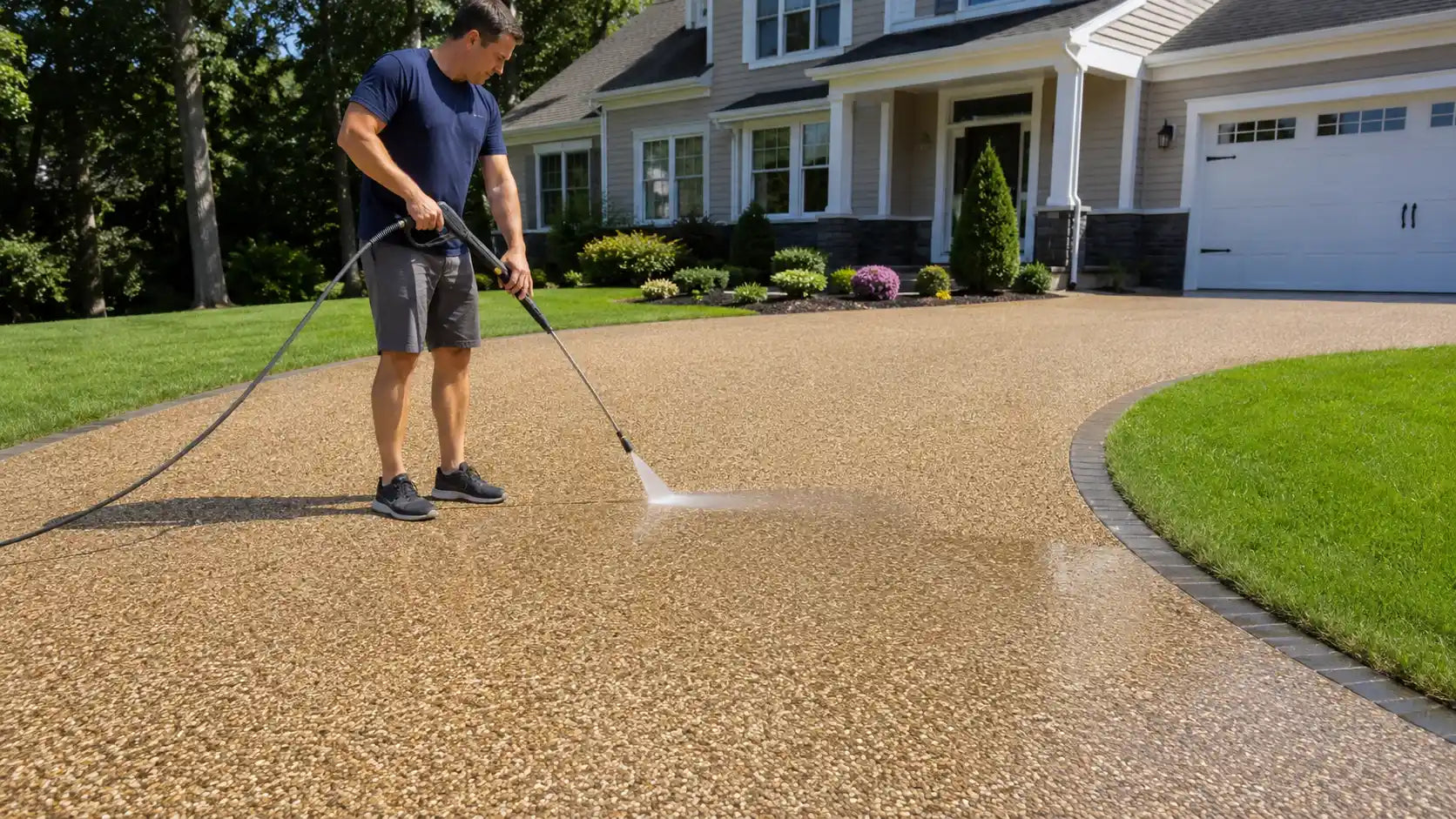
A pressure washer set to low or medium pressure (no more than 1,500 PSI) is the most effective deep-clean method for resin bound surfaces. Use a fan-tip nozzle rather than a point-tip, and keep the wand moving at a consistent distance of around 12 to 18 inches from the surface. Do not hold the spray in one spot.
A proper pressure wash removes compacted fine particles, moss spores, and any light algae growth before it becomes established. After washing, the surface should look close to its original installed finish.
Dealing With Moss, Algae, and Biological Growth
Moss and algae are the most common maintenance issue for resin bound surfaces in shaded or humid areas. They do not damage the resin itself but will discolor the surface and, if left long enough, can begin to clog the drainage channels.
Prevention is straightforward - keep the surface clear of leaf debris, which creates the damp conditions moss needs to establish.
Treatment for existing growth: apply a proprietary patio or path moss killer (sodium hypochlorite-based products work well) following the manufacturer's instructions. Leave it to work, then pressure wash at low PSI. Do not use bleach-based household products undiluted - they can temporarily lighten aggregate color.
Avoid wire brushes or metal scrapers on any biological growth. They scratch the resin coating on individual aggregate stones and accelerate future staining.
Stain Removal Guide
The good news: most stains on resin bound surfaces are surface-level and treatable with common household products.
Oil and grease stains - apply a degreaser or dish soap directly to the stain, leave for 10 to 15 minutes, then agitate with a stiff nylon brush and rinse thoroughly with hot water. Repeat if needed. Fresh oil stains are far easier to remove than dried ones, so treat promptly.
Rust stains - use a proprietary rust remover formulated for stone or paving. Apply, follow dwell time instructions, then rinse. Do not leave rust remover on the surface longer than directed - it can dull the aggregate finish.
Tyre marks - light tyre scuffing from parking fades naturally over time with UV exposure and traffic. For heavier marks, a degreaser and stiff brush will remove most of it. Tyre marks do not indicate surface damage.
Paint and resin spills - treat immediately. Wet paint can often be rinsed away with water. Once cured, paint removal requires a solvent such as acetone or white spirit applied carefully to the affected area only - test on a small inconspicuous section first.
Food and drink spills - rinse immediately with water. Most food-based stains are straightforward to remove with warm soapy water and a brush before they dry.
For a surface designed to stay beautiful for decades, see the full range of resin bound products and aggregate color blends at Resin Rock.
Seasonal Maintenance
Spring
Spring is the best time for your annual deep pressure wash. After winter, fine grit and organic debris will have settled into the surface texture. A thorough wash restores the original finish and removes any early-stage moss or algae growth before summer.
Spring is also when we see the highest installer enquiry volume - if you are planning a new installation, browse our complete resin bound kits or find a certified installer near you.
Summer
Low maintenance season. Keep the surface clear of debris and rinse as needed. If you have a garden or patio area adjacent to the driveway, be mindful of fertiliser and herbicide runoff - some concentrated garden chemicals can temporarily affect surface color if allowed to pool on resin bound.
For patio applications, our resin bound patio design guide covers how the surface performs in outdoor entertaining areas and what to expect through summer use.
Autumn
The highest-maintenance season for resin bound - and still very low effort. Clear leaves regularly, ideally weekly. Autumn leaf accumulation is the primary cause of organic staining, and it is entirely preventable with a blower and five minutes of attention.
Check that the surface drainage is running freely. Resin bound is permeable by design, but heavy debris accumulation can temporarily reduce drainage efficiency in localised areas.
Winter
Resin bound handles freeze-thaw cycles far better than concrete or block paving because the surface remains flexible rather than becoming brittle. Unlike concrete, it does not crack from frost heave. For a detailed breakdown of how resin bound compares to concrete in cold climates, see our resin bound vs concrete comparison.
For ice and snow removal, use a plastic shovel rather than a metal blade - metal edges can score the aggregate surface under pressure. Rock salt is safe for the resin binder in standard concentrations, but rinse the surface after the ice clears to prevent salt crystallisation in the drainage structure. Sand is not recommended as an ice treatment - it compacts into the surface and is difficult to fully remove.
What to Avoid
These are the most common maintenance mistakes that can shorten the life of a resin bound surface or cause unnecessary damage:
High-pressure washing above 1,500 PSI - excessive pressure can begin to dislodge aggregate stones from the resin matrix over time, particularly at the surface edges and around drains. Always use a fan tip, never a pencil jet.
Concentrated bleach or acid-based cleaners - household bleach undiluted, brick acid, or patio acid treatments are too aggressive for resin bound. They can discolor the aggregate and temporarily weaken the resin surface layer. Use products formulated specifically for resin bound or natural stone paving.
Metal scrapers and wire brushes - these scratch the resin coating on individual aggregate stones, dulling the surface finish and making future staining more likely.
Heavy point loads - resin bound is engineered for vehicular and pedestrian traffic, but scaffolding feet, skip lorry outriggers, or heavy plant equipment placed on small contact points can cause localised damage. Use protective boards to distribute weight across the surface when heavy work is being carried out nearby.
Parking on a freshly installed surface too early - this is an installation note rather than a maintenance tip, but worth including. Foot traffic is usually safe within 24 hours of installation; vehicle traffic should be avoided for at least 48 to 72 hours depending on temperature and conditions
How Long Does Resin Bound Last With Proper Care?
A properly installed and maintained resin bound driveway using a UV-resistant polyurethane binder should last 20 to 25 years or more. The surface will not degrade significantly in appearance or performance within that timeframe if the routine above is followed.
The biggest factors affecting longevity are resin quality and installation method - not maintenance intensity. A surface installed with a substandard resin will yellow, crack, and fail regardless of how well it is maintained. Resin Rock uses UV-resistant polyurethane resin engineered specifically for North American climates, including the intense UV exposure and freeze-thaw conditions of states like Florida, Texas, and Minnesota.
For a complete breakdown of lifespan by installation type, see our guide to how long a resin bound driveway lasts.
When to Call a Professional
Routine cleaning and stain removal are easily handled by any homeowner. However, there are situations where a professional inspection or repair is the right call:
Loose aggregate patches - if stones are coming loose in a localised area, this usually indicates either a poor original installation, a point-load impact, or a drainage issue beneath the surface. A professional can assess whether a repair patch is appropriate.
Edge lifting or cracking - resin bound surfaces occasionally develop edge lift around drain covers, curbs, or borders, particularly if the original edging was not installed correctly. This should be repaired promptly to prevent the damage spreading inward.
Significant organic staining that does not respond to treatment - in rare cases where moss or algae have been established for a long time, a professional clean using commercial-grade equipment may be needed to restore the surface.
If you have questions about a specific maintenance issue or want advice on whether a repair is needed, call our team on 941-415-0273 or email info@resinrockllc.com.
Thinking About Installation?
If you are a contractor looking to add resin bound to your services, Resin Rock offers North America's leading installer training - classroom, hands-on, and fully online. Our certified installers across the country are trained to the exact installation standards that make lifetime maintenance as straightforward as this guide describes.
Learn more at resinrock.com/pages/training or find a certified installer in your area.
FAQ
How often should I clean my resin bound driveway? A quick debris clearance weekly or fortnightly, a hose rinse monthly, and a full pressure wash two to three times per year is all that most driveways need. High-traffic or heavily shaded surfaces may benefit from more frequent washing.
Can I use a pressure washer on resin bound? Yes. Keep the pressure below 1,500 PSI, use a fan-tip nozzle, and keep the wand moving. Do not use a pencil jet or hold the spray stationary over one area.
Will salt damage my resin bound driveway in winter? Standard rock salt used for ice treatment is safe for the resin binder. Rinse the surface after ice clears to prevent residue buildup.
Does resin bound need to be sealed? No. The resin binder is the sealant. Unlike block paving, which requires periodic re-sealing to prevent joint erosion, resin bound does not need any additional surface treatment.
What causes patches of loose stone on a resin bound surface? Loose aggregate is almost always an installation issue - incorrect mix ratio, damp substrate, or laying in unsuitable weather conditions. It is not a maintenance failure. Contact your installer or call us on 941-415-0273 for advice.
Can resin bound be repaired if it gets damaged? Yes. Small areas of damage can be cut out and patch-repaired using the same aggregate and resin blend as the original installation. For a seamless result, use the same installer and ideally the same aggregate batch.
Get in Touch
Resin Rock is North America's leading resin bound surfacing supplier, with 7 distribution locations across the USA and Canada. Whether you are a homeowner, contractor, or distributor, our team is here to help.
Call 941-415-0273 Email info@resinrockllc.com Browse products: resinrock.com/collections/resin-bound Find an installer: resinrock.com/pages/find-an-installer Start training: resinrock.com/pages/training