If you have been researching driveway options, you have probably come across the term "resin gravel" and wondered what it actually is. Is it loose gravel? Is it the same as resin bound? Is it something different entirely?
Here is the short answer: resin gravel is a permeable surfacing system made by mixing natural decorative aggregate (the gravel) with a clear polyurethane resin and trowelling it onto a prepared sub-base. The result is a smooth, weed-free, puddle-free surface that looks like loose gravel but stays exactly where you put it. No scattering. No raking. No mess.
In the United States and Canada, this same product is more commonly called resin bound surfacing. The terminology comes from the UK, where resin gravel has been popular for over 20 years. Now it is finally taking off across North America, and Resin Rock is the largest supplier on the continent.
This guide covers everything you need to know: how resin gravel works, where you can use it, and how to get it installed (or install it yourself).
Resin Gravel vs Loose Gravel: What is the Difference?
The biggest source of confusion is the word "gravel" itself. People hear "resin gravel" and picture a driveway covered in loose stones with some kind of coating sprayed over the top. That is not what this is.
Loose gravel is exactly what it sounds like: small stones poured onto a driveway with nothing holding them together. They scatter onto your lawn, get tracked into your house, jam in your lawnmower, and need topping up every few years.
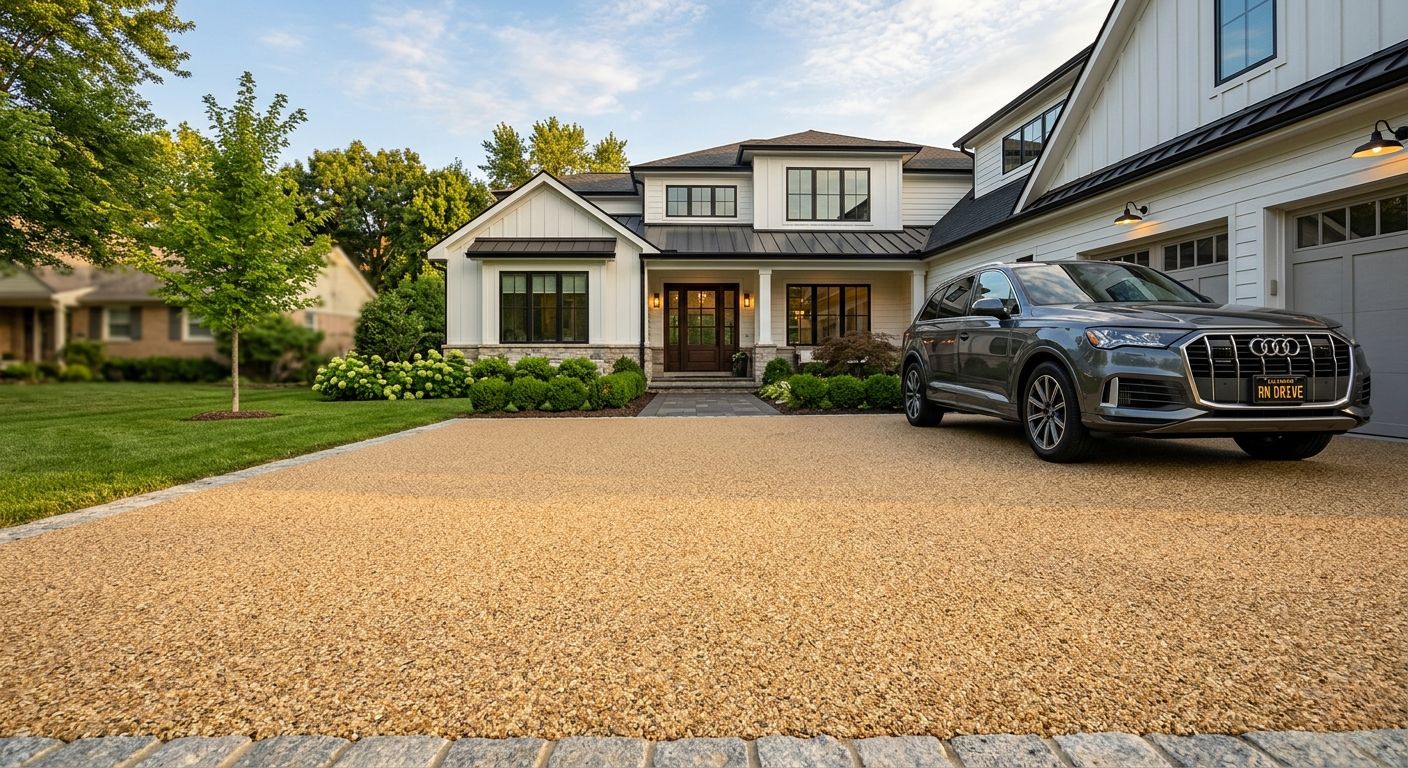
Resin gravel is completely different. The aggregate (gravel) is mixed in a forced-action mixer with a two-part polyurethane resin. While still wet, the mix is poured onto a prepared sub-base and hand-trowelled smooth. As the resin cures, every single stone gets locked permanently in place. The finished surface is solid, level, and walkable from day one.
The visual is the same beautiful natural stone you love about gravel. The performance is dramatically better.
Resin Gravel vs Resin Bonded: Two Different Products
While we are clearing up terminology, there is one more important distinction. Resin gravel (resin bound) and resin bonded sound similar but are very different products.
- Resin bound (resin gravel): The aggregate is mixed into the resin before being trowelled down. The result is permeable, smooth, and SUDS-compliant. Water drains straight through.
- Resin bonded: The resin is poured onto the sub-base first, then loose gravel is scattered on top. The surface is rough, not permeable, and stones still come loose over time.
For driveways, patios, and pool surrounds, resin bound (resin gravel) is the better choice every time. It is the system Resin Rock specializes in. You can browse our complete resin bound product range here.
Where Can You Use Resin Gravel?
One of the reasons resin gravel has exploded in popularity across North America is its versatility. It is not just for driveways. Common applications include:
- Driveways for residential homes (the most popular use)
- Patios and backyard entertaining areas
- Pool surrounds (with crushed glass added for slip resistance)
- Garden paths and walkways
- Tree pits in commercial and urban landscaping
- Wheelchair-accessible ramps and entryways
- HOA common areas, hotel grounds, and storefronts
Because resin gravel is fully permeable, it is also the surface of choice in cities and counties with strict stormwater runoff regulations. Water passes straight through into the ground rather than running off into the street, which means you usually do not need a permit.
For inspiration, take a look at our guide to 10 Stunning Resin Bound Driveway Colors and Design Ideas.
The Benefits of Resin Gravel
Here is why homeowners across the USA and Canada are choosing resin gravel over concrete, asphalt, and pavers in 2026:
1. Permeable and SUDS-compliant. Water drains straight through the surface. No puddles, no flooding, no runoff problems.
2. Weed-free. Because the surface is sealed, weeds cannot push through the way they do with block paving or loose gravel.
3. UV-resistant and won't fade. Resin Rock's UV-resistant polyurethane binder is engineered specifically for North American climates, including the intense sun of Florida, Texas, and Arizona. Cheaper resins yellow within a year. Ours do not.
4. Crack-resistant. Unlike concrete, which cracks within a few winters from freeze-thaw cycles, resin gravel stays flexible and intact for decades. We have a full breakdown in our guide to how long a resin bound driveway lasts.
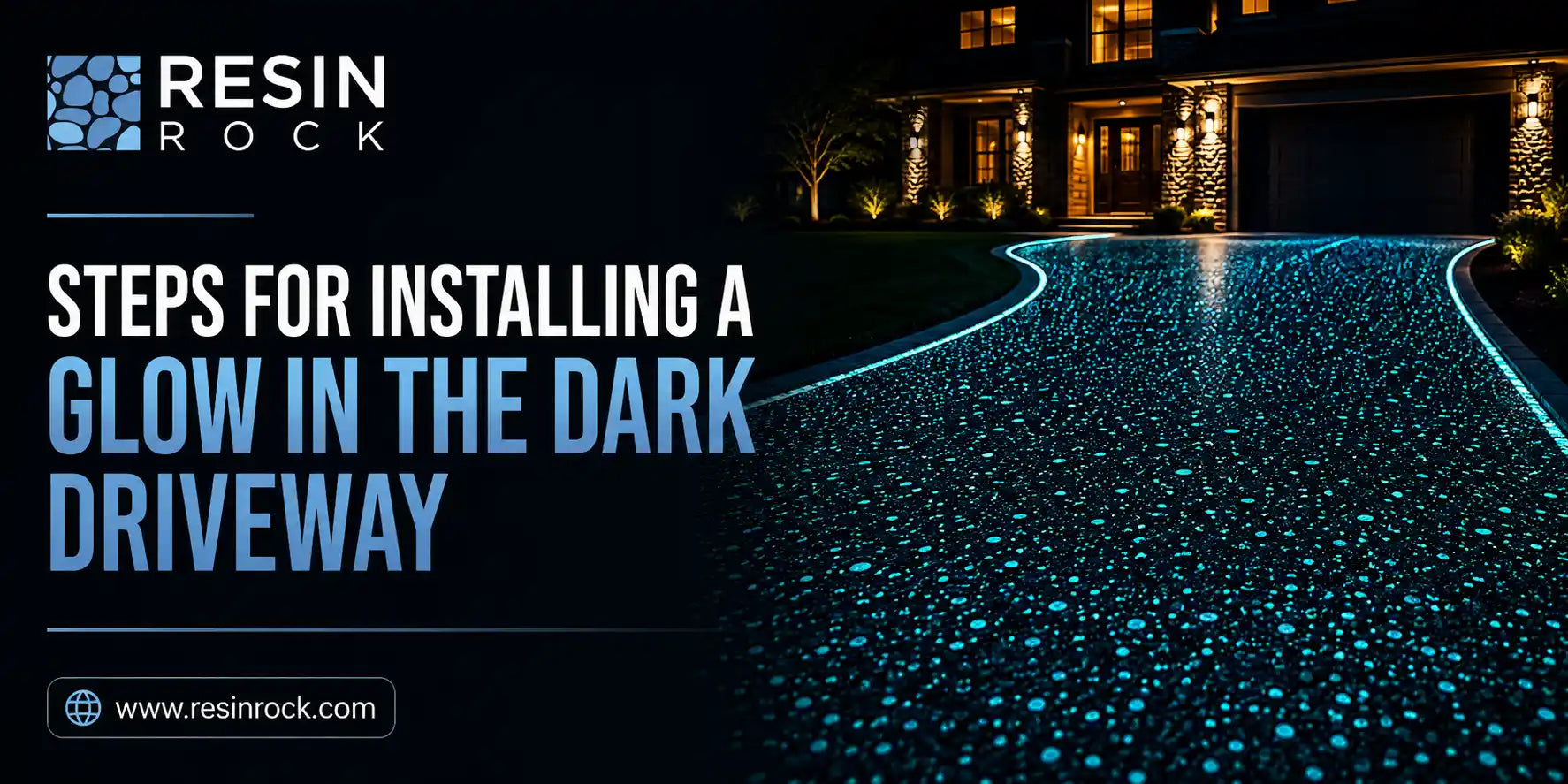
5. 30+ color blends. From classic greys and warm golds to bold blacks and even glow-in-the-dark options with our Glow Rock product line, you have far more design freedom than any other driveway material.
6. Low maintenance. A pressure wash twice a year is all it takes. No sealing. No re-sanding. No weed killer.
7. Adds curb appeal and home value. A high-end resin gravel driveway makes a property look more expensive and modern, which translates to real value when you sell.
How is Resin Gravel Installed?
The installation process is straightforward but does require precision. Here is the basic sequence:
- Sub-base preparation. A solid, stable base is critical. Existing concrete or asphalt in good condition can often be used. For new installs, Resin Rock's Rock Crete sub-base is 600 percent stronger than asphalt and ideal under resin gravel.
- Edging. Block edging or aluminum strips are installed around the perimeter to contain the resin.
- Mixing. The aggregate and resin are combined in a forced-action mixer for two to three minutes per batch.
- Trowelling. The wet mix is poured onto the sub-base and hand-trowelled smooth to a typical depth of 3/4 inch (residential) or 1 inch (vehicle-loaded areas).
- Cure. The surface is walkable in 4 to 6 hours and drivable in 24 to 48 hours, depending on temperature.
A typical 600 sq ft driveway can be completed in a single day by a two- or three-person crew.
If you are a homeowner, the easiest path is to find a Resin Rock Approved Installer near you. If you are a contractor wanting to add this to your services, our Approved Installer Training gets you certified in just a few days.
How to Maintain Resin Gravel
This is one of the easiest surfaces in the world to live with:
- Sweep loose debris occasionally to keep the surface clean.
- Pressure wash once or twice a year.
- For oil or fuel spills, blot quickly and rinse with a degreaser.
- Avoid using rock salt in winter. Sand or potassium-based de-icers are safer.
That is it. No sealing, no resanding, no special chemicals.
Why Choose Resin Rock for Your Resin Gravel Project?
Resin Rock is North America's #1 resin bound surfacing supplier and the continent's top-rated installer training provider. Here is what sets us apart:
- 30+ premium aggregate color blends to choose from
- UV-resistant polyurethane resin engineered for North American climates
- Rock Crete sub-base system, 600 percent stronger than asphalt
- 7 distribution locations across the USA and Canada for fast shipping
- Hands-on and online installer training for contractors
- A growing network of certified Approved Installers coast to coast
Whether you are a homeowner looking to transform your driveway, a contractor adding a new revenue stream, or a business exploring distribution, we have everything you need.
Frequently Asked Questions About Resin Gravel
Is resin gravel the same as resin bound? Yes. "Resin gravel" is the term often used in the UK and Europe. In the USA and Canada, the same product is called "resin bound." Both refer to a permeable surface made by mixing decorative aggregate with polyurethane resin.
Can vehicles drive on resin gravel? Yes. At a 3/4 inch depth, resin gravel handles standard cars, SUVs, and light trucks. With a Rock Crete sub-base at 1 inch depth, the system supports up to 30,000 lbs.
Does resin gravel get hot in the sun? Lighter aggregate colors stay noticeably cooler than asphalt or dark concrete. If you live in a very hot climate, choose lighter blends like Special White, Sahara, or Champagne for a cooler surface.
How long does resin gravel last? A properly installed resin gravel driveway lasts 20 to 25+ years. Many last over 30 with basic care. We have a full breakdown in our resin bound driveway lifespan guide.
Can I install resin gravel myself? Yes, if you have some construction or landscaping experience. Resin Rock sells complete DIY kits with everything included. For larger or more complex projects, we recommend hiring an Approved Installer.
Is resin gravel slippery when wet? No. The natural stone aggregate provides inherent slip resistance. For pool surrounds and slopes, crushed glass can be added for extra grip.
Does resin gravel need planning permission? In most US jurisdictions, no. Because resin gravel is fully permeable and does not increase stormwater runoff, it is exempt from most permit requirements. Always check your local regulations.
Ready to Get Started?
Resin gravel is the smartest driveway upgrade you can make in 2026. It looks beautiful, lasts decades, and barely needs any maintenance.
Browse our resin bound products to see all 30+ color blends. Shop complete kits for DIY or contractor projects. Find a Resin Rock Approved Installer near you. Start installer training and add resin gravel to your business.
Call (941) 415-0273 or email info@resinrockllc.com to talk to our team today.
Resin Rock is North America's #1 resin bound surfacing supplier, with 7 distribution locations across the USA and Canada. UV-resistant resin. 30+ aggregate blends. Industry-leading installer training.