A driveway takes more daily abuse than almost any other surface on a property. Vehicle weight, weather swings, ice, and constant foot traffic all wear it down slowly enough that most homeowners don't notice until the damage is already serious. Knowing what to look for helps you decide whether a repair still makes sense or whether it's time to look at resin bound materials for a full replacement instead.
Here are six signs worth paying attention to, along with why more homeowners are choosing resin bound surfacing materials over standard concrete or asphalt when the time comes to replace what they've got.
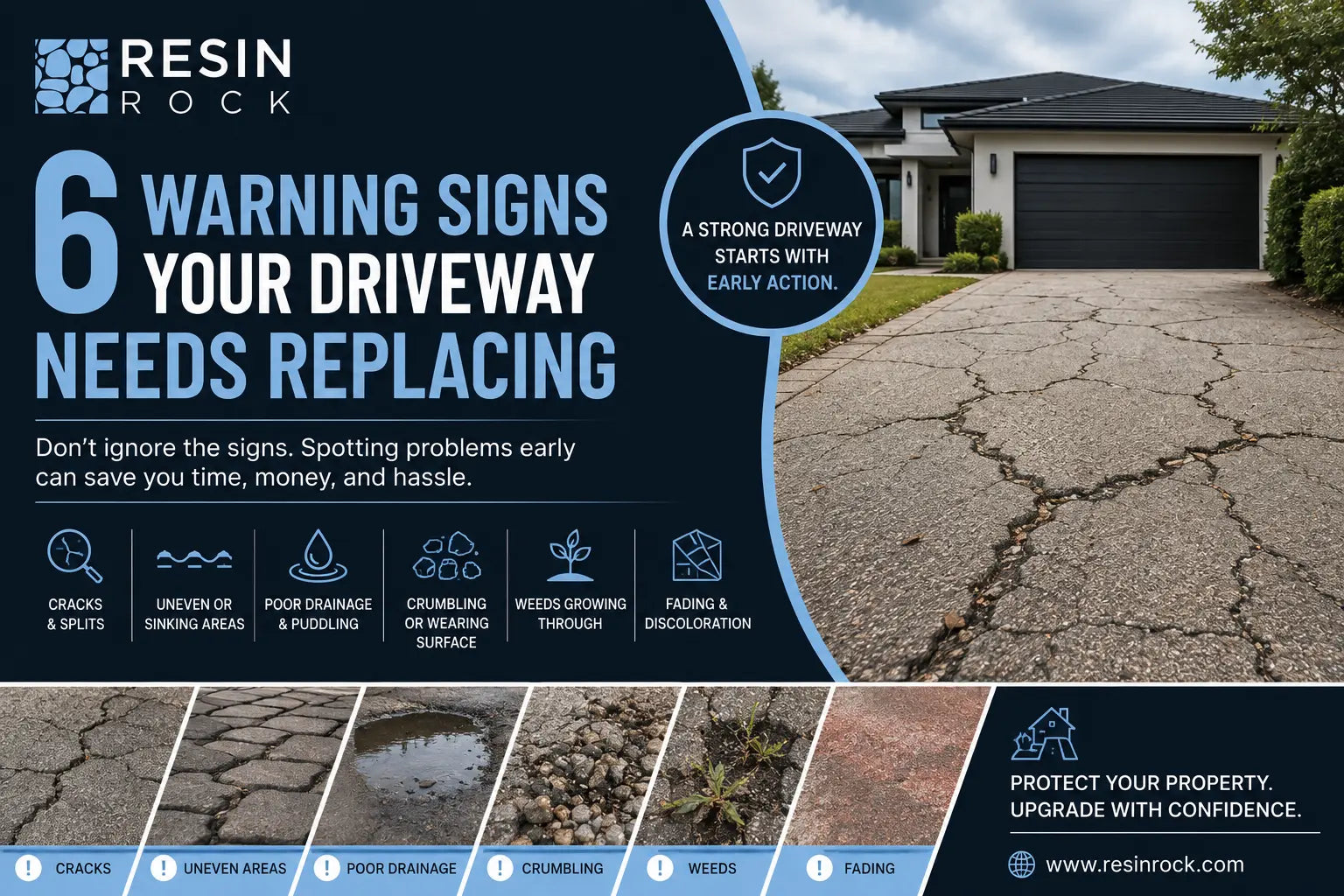
1. Deep Cracks and Widening Gaps
The ground beneath a driveway shifts more than most people realize. Soil expands and contracts with the seasons, and combined with the constant weight of vehicles, that movement eventually cracks the surface above it. A few hairline cracks are normal and usually fixable with a simple sealant. Deep cracks, wide gaps, or cracks that keep spreading no matter how many times they're patched are a different story. At that point, the base underneath has likely shifted enough that a patch job won't hold for long, and each freeze thaw cycle that follows will only widen the damage further.
2. Sunken or Uneven Sections
A driveway is built with a slight slope so water runs off toward the street or a drain instead of pooling. Once a section starts sinking, that slope stops working the way it's supposed to. Sunken spots usually mean the base underneath has eroded or compacted unevenly, and no amount of surface level repair actually fixes what's happening below it. Injecting concrete under a sunken section can buy some time, but it rarely holds up as well as starting fresh with a properly prepared base.
3. Frequent Potholes and Pitting
Potholes don't show up out of nowhere. They start as small surface chips, usually where water has gotten underneath and frozen, then thawed, then frozen again. Each cycle pushes the damage further until a chip becomes a crater. Salt and sand used for winter traction make this worse over time, since both are abrasive and wear down the surface faster than plain weather exposure would on its own. If potholes keep reappearing in the same spots even after repair, that's a sign the surface has reached the end of what patching can reasonably fix.
4. Poor Drainage and Standing Water
Puddles that sit on a driveway long after rain has stopped usually point to a bigger problem than a single low spot. Cracks, ruts, and settling all interfere with how water is supposed to move across and off the surface. Standing water left unaddressed accelerates every other problem on this list, since it seeps into cracks, freezes, and expands them further. It also creates a slip hazard during colder months once that standing water turns to ice.
5. Repairs That Keep Adding Up
Every driveway needs occasional maintenance, but there's a point where the math stops making sense. If you've patched the same three or four spots more than once in the last couple of years, or if a contractor's repair quote keeps creeping closer to what a full replacement would cost, you're better off putting that money toward something that will actually last. Repeated patchwork also tends to look worse over time, with mismatched colors and textures making the driveway look older than it actually is.
6. Age Beyond Its Expected Lifespan
Standard concrete and asphalt driveways are generally built to last somewhere between fifteen and twenty five years, depending on climate, soil, and how well the base was prepared originally. Even a driveway with no obvious damage yet is worth having assessed once it's past that range, since age related wear often shows up underneath the surface before it becomes visible on top. A driveway nearing the end of its expected life is also more likely to develop several of the issues above at once, rather than one at a time.
Why Resin Bound Is Worth Considering for the Replacement?
If your driveway is showing two or more of these signs, you're already looking at a replacement rather than another round of patching. That's usually the point where it's worth looking past standard concrete or asphalt entirely. Resin bound surfacing solves several of the problems on this list at once. It's fully permeable, so standing water and drainage issues stop being a concern. It resists the freeze thaw cracking that ruins standard concrete over time, and it holds its color and shape well past the lifespan of asphalt.
Resin Rock supplies resin bound products and resin bound surfacing materials to homeowners and contractors replacing driveways across the country. The material combines natural stone aggregate with a resin binder, troweled over a properly prepared base rather than poured and left to crack the way concrete does. That base preparation step matters as much as the material itself, since a lot of the six signs above trace back to a base that failed before the surface ever did.
Whether you're working with a certified installer or putting together a resin bound driveway kit for a smaller project yourself, it's worth comparing the long term cost of another asphalt patch against a surface built to actually solve the problem instead of delaying it. If you're weighing binder types for the new surface, our recent breakdown of UV resin vs non UV resin covers which one fits a driveway replacement specifically.
Not sure whether your driveway needs a full replacement or just another repair? Contact us and we'll help you figure out the right next step.