If you're comparing resin bound driveway kits or planning a resin bound paving project, one decision matters more than almost any other: UV stable resin or non UV resin. It affects how your driveway looks in year one, how it looks in year five, and how much you pay upfront to get there. Below, we cover every difference that matters, including discoloration, cost, strength, and workability, so you can choose the right resin bound surfacing for your climate and budget.
What's the Difference Between UV Resin and Non UV Resin?
Both are two part polyurethane resins used in resin bound gravel kits, but they're built from different base chemistries.
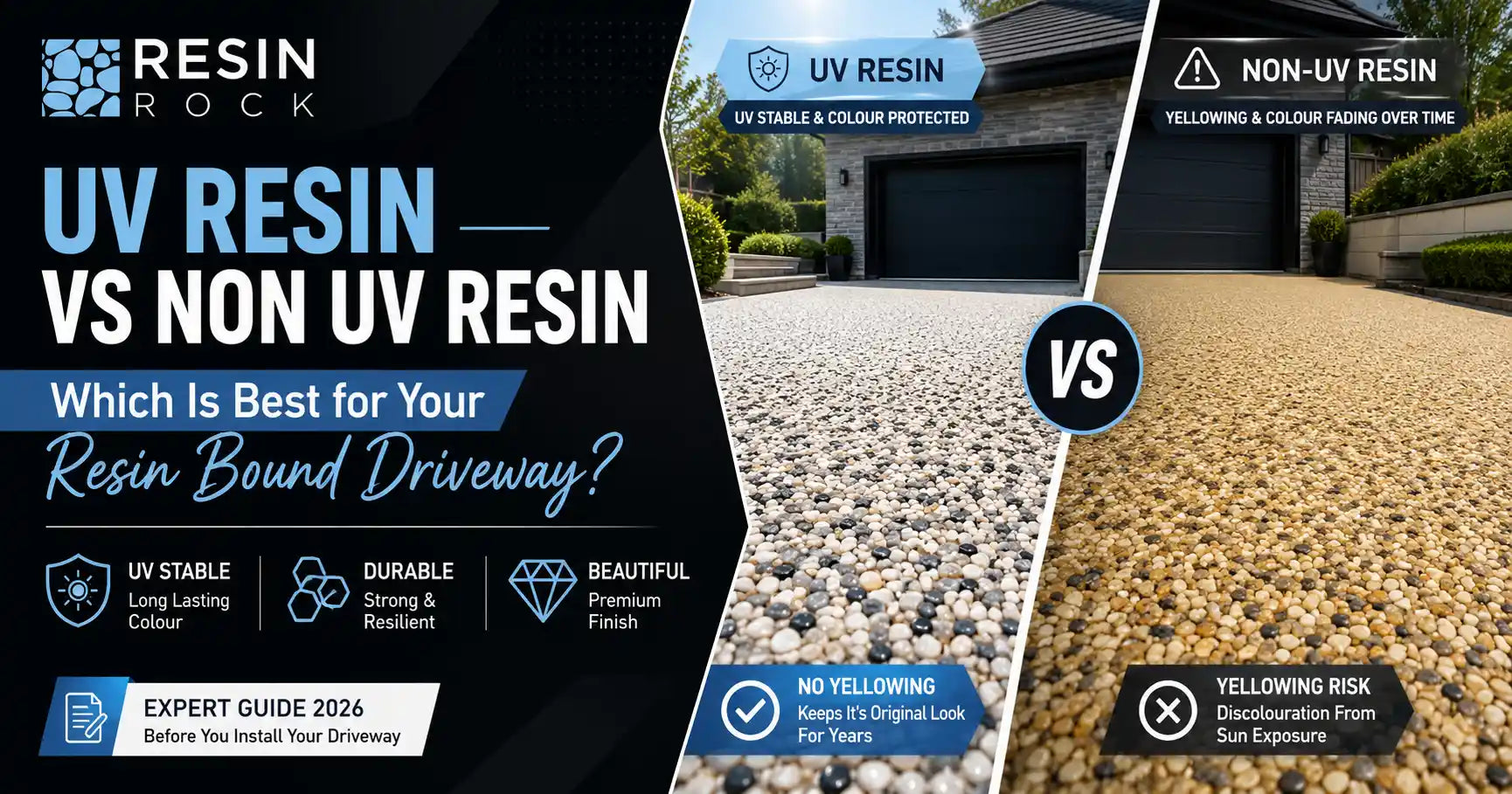
UV-stable resin (aliphatic) is engineered to resist sunlight breakdown. It stays clear and color true for years, even under constant sun exposure.
Non-UV resin (aromatic), sometimes labeled "buff" or "commercial grade" by suppliers, reacts to UV rays by yellowing or darkening. It's chemically similar to standard aromatic polyurethane, which is naturally less light stable.
If you've already read our guide on what a UV resin binder actually is, you know the binder is what holds your aggregate together, so its quality directly determines how your finished surface performs outdoors.
Every kit in our resin bound collection lists which binder type it uses, so you can check this before you buy.
Discoloration: The Biggest Difference
This is where UV and non UV resin diverge most sharply. Non UV resin can start visibly darkening within just a couple of weeks of sun exposure, and the fading is rarely even. Shadows from parked cars, planters, bins, or patio furniture block UV rays from reaching parts of the surface, leaving noticeable shadow marks or patches once the rest of the driveway has darkened around them.
UV stable resin, by contrast, resists that breakdown. Any subtle change happens slowly and uniformly across the whole surface, so you won't end up with a patchy, two tone driveway a few months after installation.
Bottom line: if you're using light colored aggregate such as whites, creams, or light grays, always choose UV stable resin. Non UV resin can work reasonably well with darker aggregates like charcoal, black, or dark brown, where any yellowing is far less noticeable.
Cost Comparison
Non UV resin is the cheaper option upfront, which is why some suppliers still offer it as a budget alternative. UV stable resin typically costs more per resin bound kit because the aliphatic raw materials cost more to manufacture. For a full driveway, that price gap adds up, but it needs to be weighed against the cost of a driveway that looks patchy or outdated within a year.
Many homeowners who initially save money with non UV resin end up paying again later for a rejuvenating sealant or, in worse cases, a full resurfacing. When you calculate cost per year of good appearance rather than cost on installation day alone, UV stable resin is almost always the better value for outdoor resin bound driveways, paths, and patios exposed to direct sunlight. Our resin bound driveway cost guide breaks down exactly where your budget goes on a typical project.
Strength, Flexibility and Durability
Resin chemistry doesn't just affect color. It affects how the surface holds up structurally.
Non UV resin tends to be harder once cured, which sounds like a benefit but actually makes it more brittle. Brittle surfaces are more prone to hairline cracking, especially with ground movement, freeze thaw cycles, or heavy vehicle loads.
UV stable resin cures with more flexibility, allowing the surface to move slightly with temperature changes and sub base shifts without cracking.
For driveways in regions with real seasonal swings, hot summers and freezing winters, that added flexibility isn't just cosmetic. It's a durability feature that protects your investment and supports the kind of long lifespan we outline in our resin bound driveway lifespan guide.
Workability During Installation
UV stable resin also tends to be easier to work with, particularly in warm weather. It stays more consistent and manageable during mixing and troweling, which helps installers achieve a smoother, more even finish. Non UV resin is more sensitive to humidity and damp conditions, which can affect cure time and finish quality. This is worth factoring in if you're installing with a resin bound driveway DIY kit rather than hiring a professional crew.
UV Resin vs Non UV Resin: Quick Comparison
|
Factor |
UV Stable Resin |
Non UV Resin |
|
Discoloration |
Minimal, even fading over years |
Visible within weeks, often patchy |
|
Best aggregate colors |
Light, mid tone, or dark |
Dark colors only |
|
Upfront cost |
Higher |
Lower |
|
Long-term value |
Better, fewer repairs or resurfacing |
Lower, may need rejuvenation sooner |
|
Flexibility |
More flexible, crack resistant |
More brittle, crack prone |
|
Workability |
Easier in warm or humid weather |
More sensitive to conditions |
|
Best use case |
Driveways, patios, sunny paving |
Shaded, low visibility, budget areas |
Which Should You Choose?
Choose UV stable resin if you're installing a resin bound driveway, resin bound pathway, or any surface in direct sunlight, especially with light or mid tone aggregate. It's the industry recommended standard for outdoor resin bound surfacing in the USA and is used in nearly every professional resin bound kit built for driveways.
Consider non UV resin only for shaded areas, indoor applications, dark aggregate blends, or short term, low budget projects where minor discoloration isn't a concern.
For most homeowners and contractors browsing resin bound driveway kits, resin bound gravel kits, or DIY resin bound kits in the USA, UV stable resin is worth the extra cost. It protects your color, your surface strength, and the overall value of the finished project, whether it's a full driveway, a pathway kit, or a patio upgrade. Every kit in our resin bound kits collection is built around UV resistant resin as standard, so you don't have to weigh this decision on your own.
Frequently Asked Questions
Can I mix UV and non UV resin in the same project?
No. Always use one resin type consistently across a project to avoid uneven curing and inconsistent color.
Will UV stable resin ever discolor at all?
Very minimally, and evenly, over many years. It won't develop the patchy shadow marking that non UV resin can show within weeks.
Is UV stable resin worth it for a resin bound driveway kit?
For most outdoor installations exposed to sunlight, yes. The extra cost is usually offset by a longer lasting, better looking, crack resistant surface.
Does resin type affect how long my driveway lasts?
Yes. Non UV resin's brittleness makes it more prone to cracking over time, which can shorten the practical lifespan of the surface even if the aggregate itself holds up. Learn more in our resin bound surfacing overview.
Ready to Start Your Project?
Every Resin Rock kit is built with UV resistant resin as standard, so you get lasting color and strength without having to weigh the trade offs yourself. If you have questions about which resin bound driveway kit fits your project, climate, or budget, our team is ready to help.
Contact Us today for guidance, a free estimate, or help finding the right resin bound kit for your driveway, patio, or pathway.