Cold months bring a specific set of problems for any outdoor surface: freezing temperatures, repeated snow and ice cycles, road salt runoff, and the constant expansion and contraction that comes with swinging temperatures. Homeowners comparing driveway materials often assume concrete or asphalt is the safer bet in winter, but resin bound surfacing actually holds up remarkably well through freeze and thaw seasons when it is installed correctly. This guide looks at exactly why that is, what to watch for, and how to choose the right resin bound materials for a driveway that needs to survive a real winter.
How Does Resin Bound Surfacing Handle Freeze and Thaw Cycles?
One of the most damaging things that happens to outdoor surfaces in winter is water seeping into small cracks, freezing, expanding, and widening those cracks further with every cycle. Resin bound surfacing is naturally permeable, meaning water drains through the surface instead of pooling on top and refreezing into a sheet of ice. This porous structure is a major reason resin bound paving tends to avoid the heaving and cracking that plain concrete driveways often develop after a few harsh winters.
Does Resin Bound Surfacing Reduce Ice Buildup?
Because meltwater passes through the surface rather than sitting on it, resin bound driveways generally develop less standing ice than solid, non permeable surfaces. Less standing water means fewer icy patches near the front door, garage entrance, or walkway, which matters for anyone trying to avoid slips during the coldest months of the year.
Is Resin Bound Surfacing Resistant to Road Salt Damage?
Road salt is one of the most common causes of surface damage on traditional concrete driveways, since the chloride in salt penetrates the surface and accelerates cracking and spalling over time. A properly bonded resin bound surface, especially one built with a quality resin binder, resists this kind of chemical breakdown far better than untreated concrete. This makes resin bound solutions a practical option for homeowners in regions that rely heavily on salt or de-icing chemicals through winter.
Can Resin Bound Driveways Handle Snow Plows and Shoveling?
Yes, when the surface has been installed with a solid, properly compacted base. Resin bound surfacing forms a hard, bonded layer that stands up to regular shoveling and light plowing without loosening or scattering the way loose gravel does. Homeowners should still use a plastic edged shovel rather than a metal blade to avoid surface scratches, but overall the material performs well under normal winter maintenance routines.
Does Cold Weather Affect the Resin Itself?
Resin used in quality resin bound products is formulated to remain flexible and stable across a wide temperature range, which helps the surface resist becoming brittle in freezing conditions. This is one reason it matters to source materials from an established resin bound material supplier rather than a generic or unverified product, since inferior resin can become stiff and prone to cracking once temperatures drop well below freezing.
Are Resin Bound Driveways Easier to Maintain in Winter?
Maintenance stays fairly simple through winter months. A resin bound surface does not require sealing every season the way some paving materials do, and its smooth, seamless finish makes it easier to sweep away slush and debris compared to jointed pavers where snow and grit can collect between the gaps. For a full season by season approach, our guide on resin bound driveway maintenance walks through what to do at each point in the year.
Should Homeowners Consider a DIY Resin Bound Kit for Winter Projects?
Many homeowners look at a resin bound driveway kit as a way to prepare their property before winter sets in, and a well planned DIY resin bound kit can work well for smaller driveways, pathways, or patios when the base preparation is done correctly. A resin bound gravel kit gives homeowners full control over aggregate color and resin binder ratio, and browsing a full resin bound kits is a good starting point for comparing options, though larger driveway areas or heavily trafficked spaces often benefit from a professional install to guarantee proper compaction before the cold sets in.
How Can Homeowners Tell If Their Current Driveway Won't Survive Another Winter?
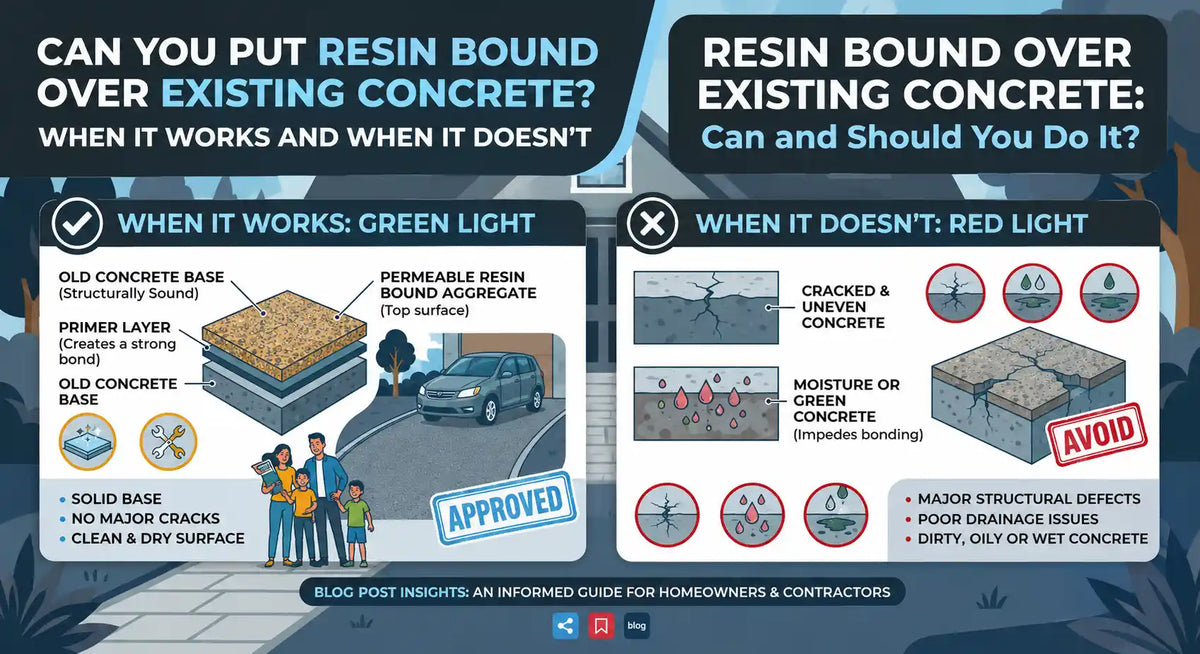
Surfaces that already show cracking, pooling water, or crumbling edges before winter arrives are far more likely to fail once freeze and thaw cycles begin. Reviewing the common warning signs ahead of time, covered in our article on warning signs a driveway needs replacing, can help homeowners decide whether a resin bound upgrade makes sense before the first freeze rather than after storm damage has already set in.
What Should Buyers Look for When Choosing Resin Bound Materials for Winter Climates?
Not every resin bound product on the market is built the same way, and winter performance depends heavily on the quality of the resin binder and the consistency of the aggregate blend. Buyers should confirm that any resin bound surfacing materials they choose are rated for cold weather flexibility and backed by a manufacturer that stands behind its formulation, rather than assuming all resin bound kits perform the same way once temperatures drop.
Final Answer: Why Resin Bound Surfacing Makes Sense for Winter Climates?
Resin bound surfacing holds up well through winter because it drains instead of pooling, resists the chemical wear caused by road salt, and uses a resin binder engineered to stay flexible rather than brittle in the cold. Combined with straightforward maintenance and the option to install a full driveway or a smaller DIY resin bound kit project, it gives homeowners a genuinely practical alternative to concrete or asphalt for properties that deal with real winter conditions every year. Choosing quality resin bound materials from a supplier that understands cold weather performance is what ultimately determines whether a driveway sails through winter or starts showing damage by spring.